

Daniel Bates couldn’t believe his eyes. But there it was, tucked between a pastel row of cafés and cobblestone alleys in downtown Ljubljana, Slovenia—a friendly local game store. The International Mission Board missionary grabbed his wife, Heather, and derailed their shopping trip.
“If there’s a game shop, then there are gamers here,” Daniel said, energized by the discovery in their new city. He pulled Heather through the door and into a world alive with colorful miniature role play scenes and towers of board game boxes.
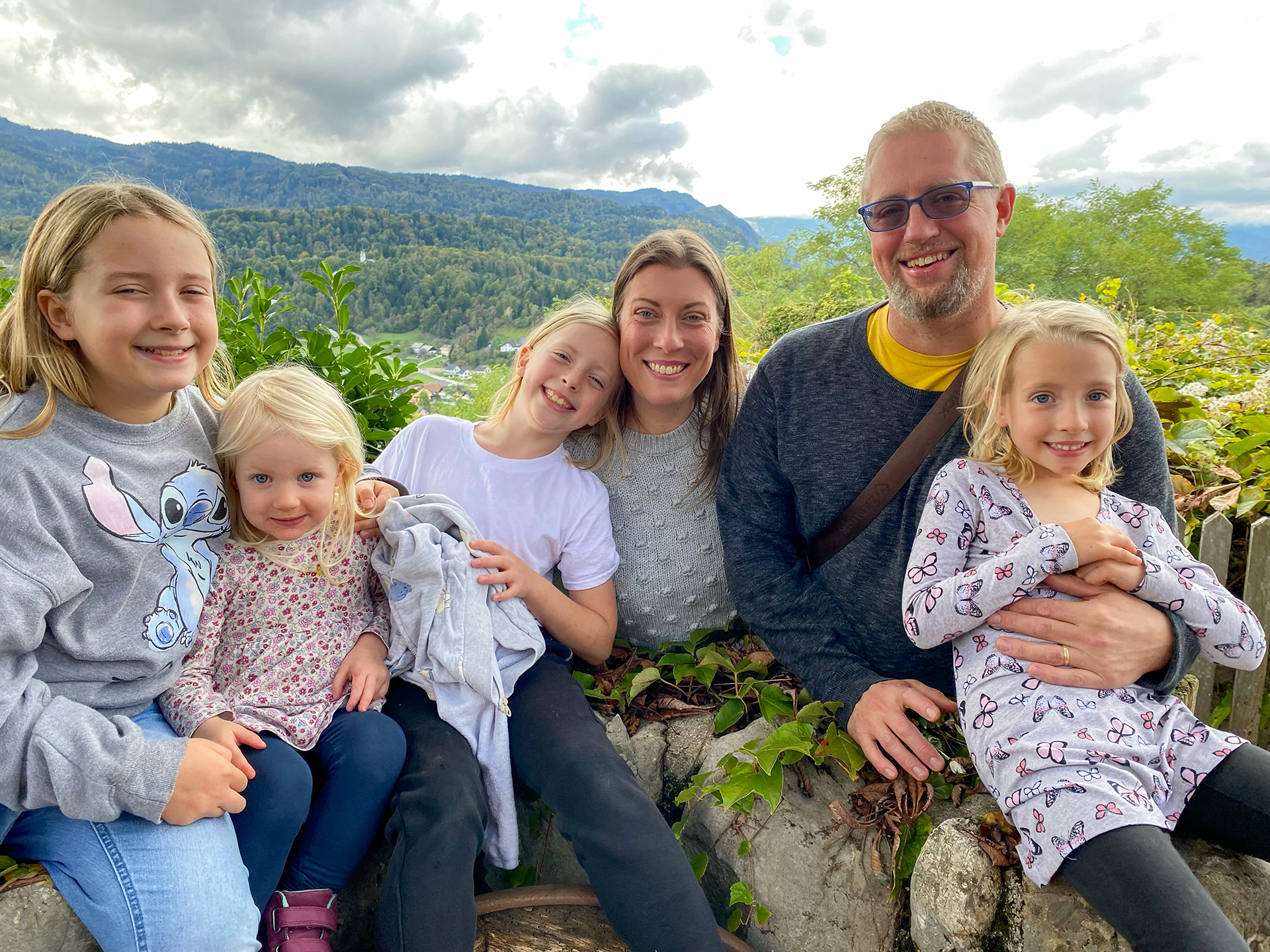
Daniel and Heather Bates moved with their kids to Ljubljana, Slovenia to work with Slovenian churches. The IMB missionaries were sent from North Wake Church, Wake Forest, North Carolina. IMB Photo
Daniel loves playing board games.
Heather? She played them in the past but wasn’t at the same die-hard level when she and Daniel were younger. So early in their marriage, Daniel went to the local coffee shop or game store to play with other enthusiasts. He used those game nights in Wake Forest, North Carolina, to share the gospel.
Finding a game shop in Slovenia wasn’t just fun, it was a gamechanger for the missionaries. They found their people.
It had been hard for the missionary family to make close local friends when North Wake Church in Wake Forest, North Carolina first sent them to Slovenia through the IMB. Their Slovenian language skills were still a work in progress, so most interactions with parents at the kids’ school or with neighbors stayed polite and surface-level.
But in this game shop, the connection through board games was immediate. The owner invited Daniel to join a weekly game night in another town. The distance wasn’t an issue. Slovenia, after all, is roughly the size of New Jersey, and the gaming group drew people from every direction. They used a Discord channel to keep in touch during the week.

Many Slovenians are board game obsessed. IMB missionary Daniel Bates uses his own love of games to share the gospel. IMB Photo
Discord was once mainly a gamers’ chat platform, but is now a gathering place for every possible niche. It became a digital living room where Daniel checked in throughout the week. It’s where friendships grew after game night ended.
“We use different social platforms—Reddit, WhatsApp, Messenger, Discord—as part of our digital engagement strategy for ministry. This is where people gather, so we want to be there too,” Daniel said. “We’ve found most will never talk to you in person, but they will chat on the computer with you.
“But taking these relationships from digital to physical is hard,” he continued. “That’s what made this gaming group so different. It’s hybrid. They meet physically and use their Discord channel to keep in touch during the week.”
As Daniel interacted in person and online, he became a part of the clan. They shared strategies and swapped stories. He found that many were hungry for authentic conversations and relationships. In this space, the missionary asked questions about religious beliefs and shared his own faith in Jesus Christ. One player even asked to meet one-on-one, giving Daniel the opportunity to share the full gospel.
Through this group, Daniel and Heather caught a glimpse into Slovenian young adult culture. They were board-game obsessed. Shops like the one downtown rented out games.
“We began thinking of how we can use this to reach our city,” Daniel said. “Gaming culture isn’t really about the games. It’s about being in a group and connecting over something. It really fits this need for authenticity we are seeing.”
This insight sent the missionaries back to their roots in North Carolina — back to the days when Daniel first used board games to open doors for gospel conversations. Only, the Bateses went bigger. They helped churches host game and Lego nights. The young adults they’d met online weren’t afraid to step into a Protestant church — so long as they had a reason to be there. In Slovenia, evangelical Protestants are often viewed with suspicion, sometimes even seen as a cult. In a country of 2.2 million, there are only nine evangelical churches with roughly 300 total members.

Game night at a Slovenian church attracts young adults to buck traditions and step inside a church. Most grew up thinking anything Protestant was cult-like. These types of gatherings help churches share the gospel and debunk the stigma. IMB Photo
“To get people who are not part of the church to come in is very difficult,” Daniel explained about the stigma. Slovenians claim Roman Catholicism by heritage, but many young adults privately identify closer to atheism. Family and cultural expectations keep them from exploring other faiths. They could be shunned by family or lose friends.
So, when young adults show up for board games at a church, it’s a big deal. They are breaking long-standing traditions just by coming in the door. They spend hours sitting next to church members discussing life and what it means to have faith in Jesus.
It’s just the beginning.
Pray for Daniel and Heather as they work alongside Slovenian churches to build genuine relationships, both online and face-to-face. They have just moved to a new city in Slovenia and ask you to pray for open hearts and minds to the gospel there. Through board games, Discord chats and everyday conversations, they’re finding new ways to share the gospel with those who might never encounter it otherwise.