

A Balinese community gathered to bury their dead during an elaborate ceremony in Indonesia. By all outward appearances of the Hindu funeral, this one person died spiritually lost. He or she is separated from Christ for eternity.
This is one person. The reality is that 160,101 die daily without knowing Jesus Christ as Lord and Savior.

That statistic is staggering, but your International Mission Board missionaries live among the lostness around the world.
They witness beautiful, vibrant displays of local culture that often mask spiritual beliefs that enslave followers to a life of fear and a lack of eternal hope.
The mystic beauty of ngaben, a traditional Balinese Hinduism funeral ceremony, is one such ritual. As you look at the photos, consider the reality for this person and thousands of others who died on the same day.
We face a great challenge to reach the lost with the gospel, but we worship a much greater God. Through His power and with the very good news we bring, we will continue in obedience toward the fulfillment of the Great Commission.
On a sweltering, humid day on the island of Bali, Indonesia, the clamor of drums, gongs and bells fill the air as huge crowds smash together in the main street. The constant noise is interrupted by shouts, cheers and whistles every time two 25-foot bulls rise and move forward. Behind the bulls, an ornate 75-foot tower sways precariously as it moves down the packed street.

This funeral procession is unique. It’s called pelebon, a funeral reserved for prominent members of the Balinese royal family. Hence, the scale of the bulls (lembu) and tower (bade) that carry the body to the temple for cremation.

Hundreds of community members known as krama banjar participate in the procession. A small army of men take turns carrying the giant bulls, the towering bade and royal princesses on sedans from the palace to the temple.

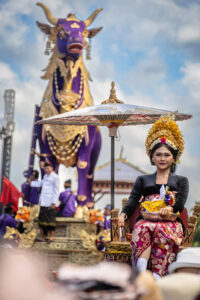
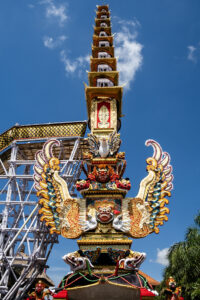
Talented artists and sculptors designed every intricate detail of the lavish bades and sarcophagi. Musical troupes play traditional instruments throughout the event. However, both the art and instruments have a purpose beyond simple beauty. They are meant to ward away evil spirits that may impede the deceased’s journey to the afterlife.


When the procession finally reaches the ancient temple, it enters a space fraught with spiritual imagery. Statues of demon gods such as Rangda, a child-eating witch goddess, stand throughout the temple. A split-gate or candi bentar looms large in the background, representing the gateway between the earthly and spiritual realms through which the dead will pass.
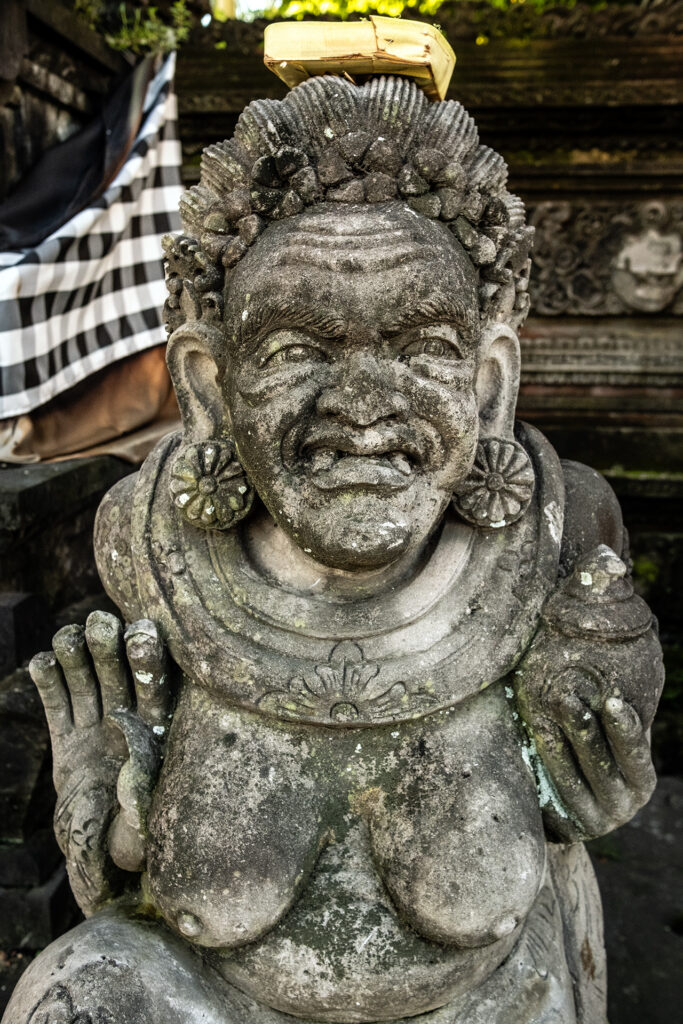
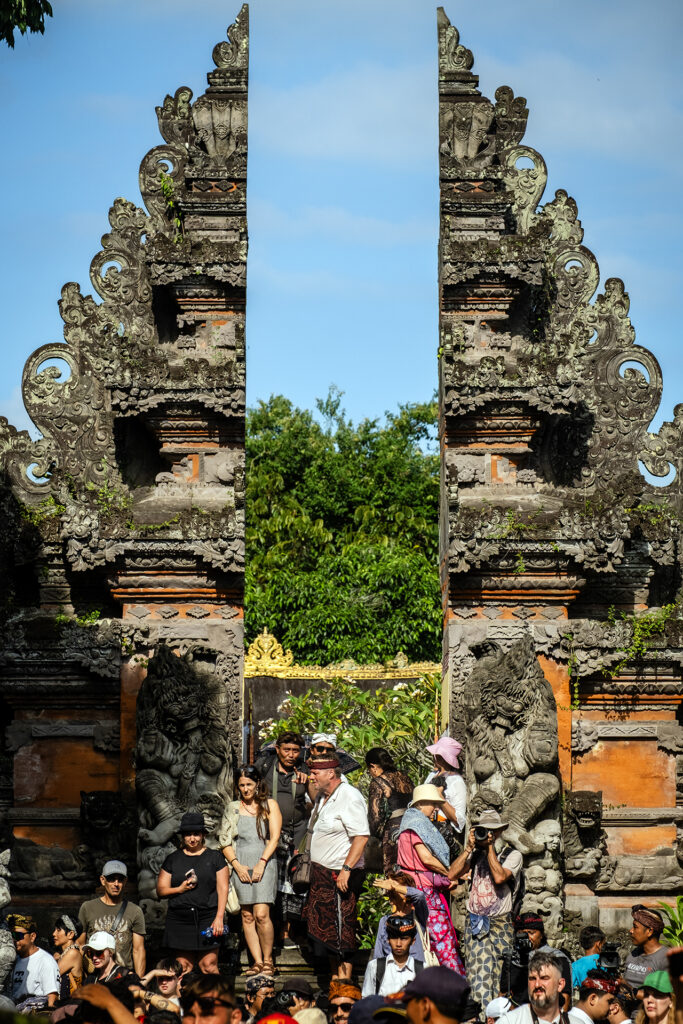
As the bodies are conveyed from the bades into the sarcophagi, participants circle it multiple times representing the cycle of reincarnation. Shamans and priests receive offerings brought by loved ones and bless them before they are placed in the sarcaphogi with the bodies.

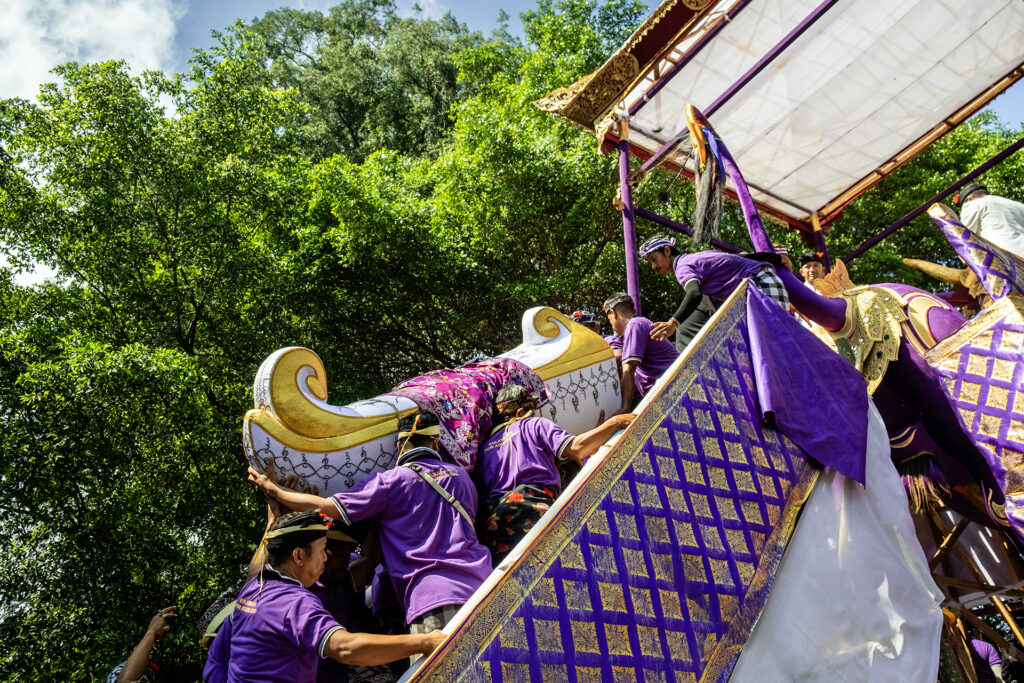
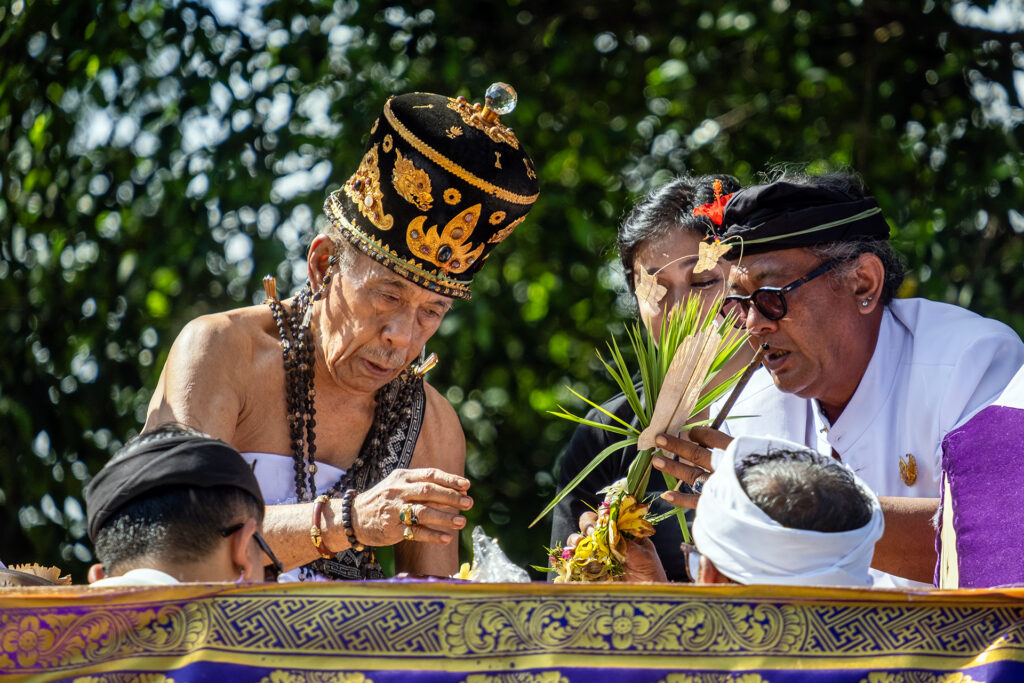
A high priest or pendanda performs the final rites before the bodies are sealed in the bulls with all the offerings. Family members say prayers and final words as they set the bulls on fire. The funeral ends as the blaze engulfs the bulls and the bodies turn to ash – the literal meaning of ngaben.
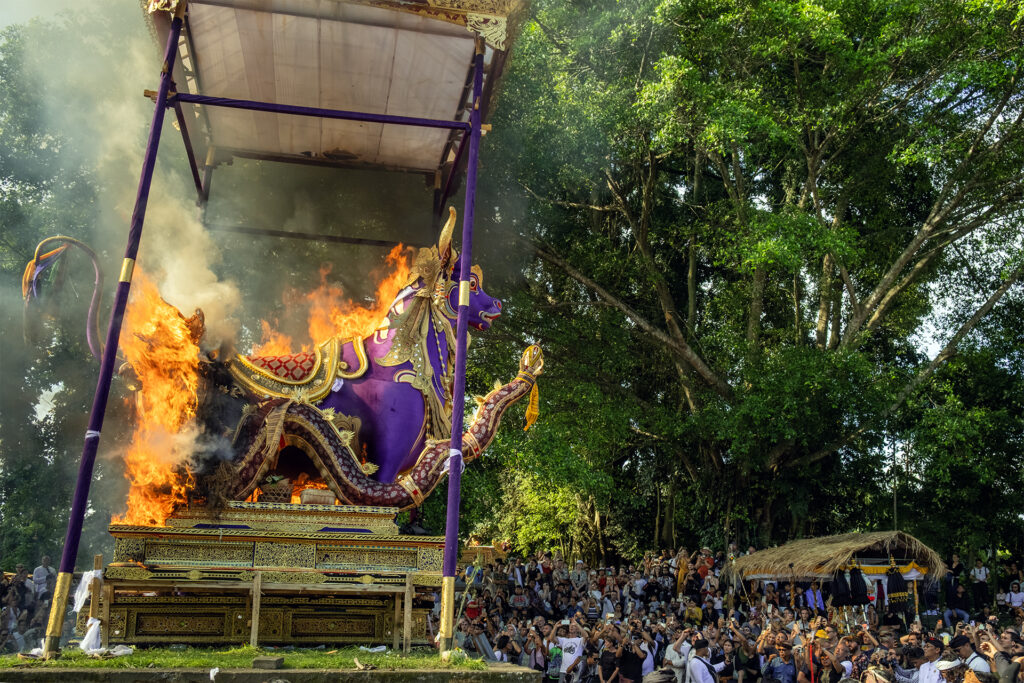
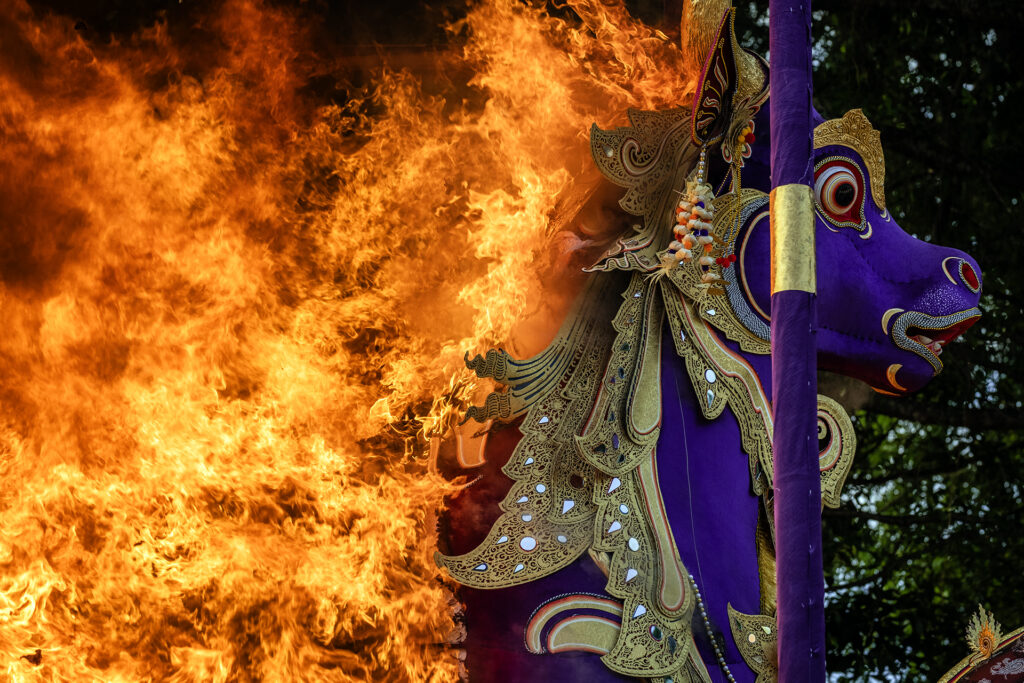
The core belief behind this elaborate ritual is that a proper send-off will allow the deceased to safely reach the afterlife. Their ultimate desire is to attain moksha, when one breaks free from the endless cycle of reincarnation. If fate instead returns them to Mother Earth, they hope that at least karma will put their soul in a better position in the next life.



As evidenced by the size and scale of this funeral procession, the Balinese culture and worldview is steeped in the fear of evil spirits and the uncertainty of reincarnation. The spiritual soil for sowing seeds of the gospel here is hard.
Pray for your missionaries who often work years without seeing fruit.
Pray the Holy Spirit will comfort them when they are discouraged and lead them to individuals who are open to hearing the truth.
Give so that more can go. IMB missionaries are fully supported by the generous and faithful gifts of people like you.
Go and bring the good news to those around you and to those on the other side of the world. When God calls you, respond in faith.
Send more workers into the harvest fields. Pray that God would use your church to raise up the next generation of missionaries.