

“You cannot be in here,” the evil spirit said to Mary, “I see a different Spirit around you, a Spirit within you. There is a light around you, and that light is not welcomed in this home anymore.”
Mary grew up in a poor Southeast Asian province. As a young girl, she was sponsored through a humanitarian aid program where she was taught about the Lord. During her teenage years, God brought Mary to a place of needing Christ, and so she walked away from her family’s Buddhist faith.
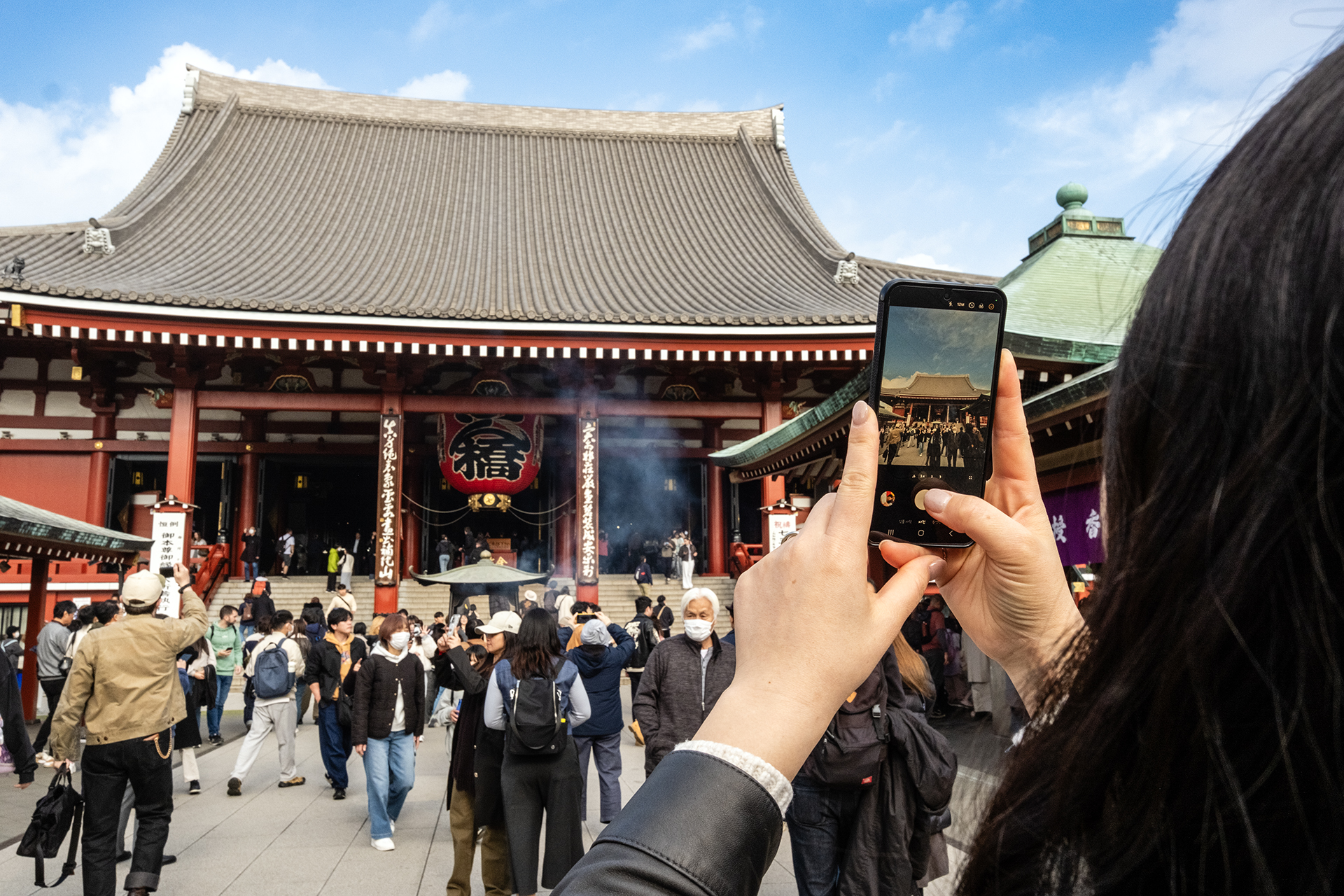
In a global culture where mobile phones are central to daily living, the IMB is focusing on digital engagement strategies to share the gospel. IMB Photo
Mary is a first-generation Christian, meaning she is the first of all her family members to accept Christ. In many Southeast Asian cultures, religion and ethnicity are strongly interconnected, making any decision to depart from your family’s faith difficult. Mary came from a specifically Buddhist background where her grandmother engaged in spiritism, inviting demonic spirits who would predict the future into her body. When Mary became a Christian, the spirit in her grandmother and her family rejected her, yet Mary still chose to follow God.
These are the kinds of stories that International Mission Board missionary Stephen Cox and his local team in Southeast Asia are sharing with Buddhists through digital engagement. Many of the testimonies were given by former Buddhists who want to show that Christ is worth the risk of being rejected by their families.
Cox and his team record, edit and upload these video testimonies to a website. Then, a clip of the video is placed as an ad on social media that viewers can click to message back-and-forth with a responder.
Cox’s responders consist of two local believing women who start conversations, build relationships and then share the gospel with inquiring messengers. Cox emphasized how digital engagement has accelerated their seed-sowing ministry in a unique way.
“Even if I shared with one person each day, that would only be 30 people a month,” he said, “But each of our responders is having one-on-one conversations with people—about 40 or 50 each day. And in our responses, we are making sure that we communicate the gospel to those who are messaging us.”
Furthermore, on the main website, there is a list of local churches and their locations that viewers can visit if they’re interested.
“My goal is for this to be a local ministry,” Cox said.
Making this digital ministry local is important because local responders have a better understanding of the viewers’ language and culture. They understand that, in Southeast Asia, there are Buddhist rituals associated with every aspect of life (promotions, graduations, funerals, marriages, etc.), and it can be intimidating to stand against those cultural expectations.
At one of Mary’s university events, they were celebrating a Buddhist holiday. Mary, a new believer, stood up in front of everyone and said she would not participate because she was Christian. Surprisingly, the school asked the following day if there was anyone else who did not want to take part in the holiday because of a different religion. Another 15 students stood up.
Eventually, they started a Bible study, and a small church was planted near Mary’s university.
Cox and his team hope that testimonies like Mary’s will inspire more Buddhists to explore God and the Bible despite backlash.
Pray for the locals who are sharing their testimonies and declaring Christ publicly. Pray for physical and spiritual protection, as they will undoubtedly be spiritually attacked.
Some names have been changed for security.