

In one Southeast Asian country, missionaries are pursuing a unique group of people through digital engagement: Muslim women.
According to Sara Whalen, the missionary leading this online pursuit, the group mostly features young women without children and women whose children are past school age who are more publicly accessible.
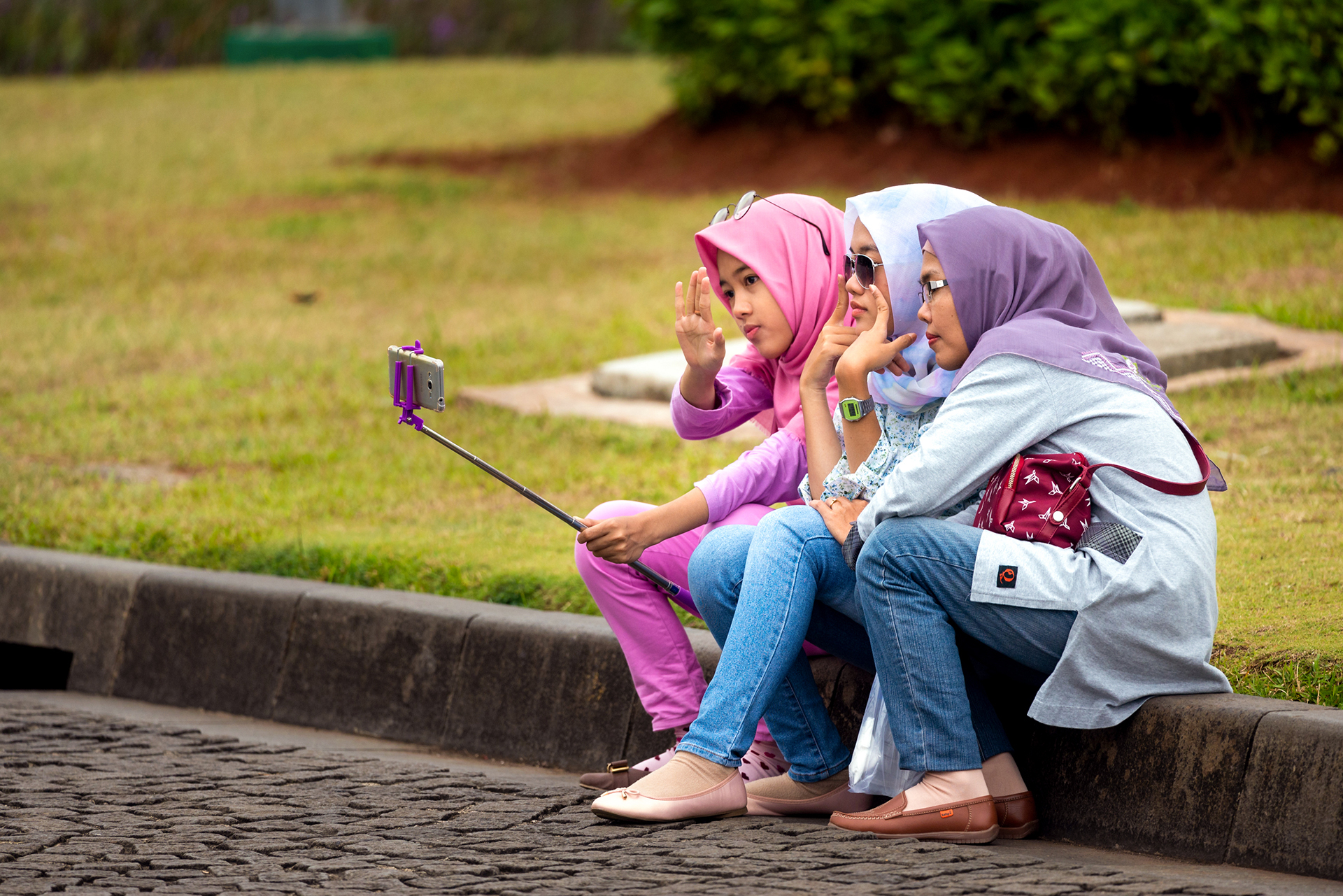
Even in remote parts of the world, people often have cell phones. Missionaries are finding ways to build connections through digital engagement strategies. IMB Photo
The rest of the local women who have families to raise are more often working in the home.
“And it is much harder to have access to them,” Whalen shared.
There are millions of Muslim women in this country in areas where there are no believers, no church and no access to the Bible.
Since many female missionaries are also managing their own households, they have far less time and energy to devote to the local women, Whalen explained. Furthermore, in an Islamic context, male missionaries cannot actively pursue relationships with women because it is culturally inappropriate.
“So, if women aren’t doing it, who’s going to do it?” Whalen asked.
Whalen noticed every woman in her host country uses a phone, and she realized that digital engagement could create connections with women they would not normally reach, like the many women caring for their families in their homes.
Thus, Whalen and her team began to launch online advertisements geared toward Muslim women in their country. When someone clicks on their ad, a link leads them to a messaging platform where they can text with a responder.
Currently, the all-female responder team consists of Whalen, a few local believers and other missionaries. These women volunteer their time to engage with any who message in — answering questions, texting prayers and sharing the gospel.
Many women who click on the ads ask for prayer for their marriages, health and raising children. They ask questions like, “What do you mean God has a son?”
In this country, Whalen explained, “Men see women as things that they own. There is lots of divorce, lots of beating, lots of just being neglected, unseen and unvalued.”
According to Research Gate author Nobita Pagan, many Southeast Asian Islamic countries persistently struggle to support gender equality, “… with women facing legal, social, and economic barriers to full participation in society.”
Digital engagement therefore provides opportunities for missionaries and local believers to encourage the hopeless and demonstrate the reliability of Christ. These ads not only intrigue viewers with an interesting statement or visual but are focused on including parts of gospel truth in their messaging.
“I want our ads to have substance,” Whalen explained, “I feel like this is from God: that our ads can stand alone, whether a person messages in or not, that He can still use the message of the ad as a way of sharing and communicating Scripture truth, gospel truth or the gospel itself.”
Locals and missionaries alike are participating in digital engagement simply from their homes, creating access to millions of people who would otherwise be difficult to connect with.
“Because even just in our rural areas, there are no churches, there are no believers trying,” Whalen shared, “there’s just a lot of places that, literally, this would maybe be our only way right now [to share the gospel].”
After more than 2,000 conversations over six months, two ladies have accepted Christ to the team’s knowledge.
“I think that spurs me on to want to push this even more,” Whalen said, “Because if you have to share the gospel a thousand times for one, that’s a lot of needing to share the gospel.”
Pray that the Muslim women of Southeast Asia would see, engage and be impacted by these advertisements, bringing about salvation. Pray that more young women are willing to volunteer as responders, and that they would be filled with wisdom and knowledge as they interact with the lost.
Names changed for security reasons